



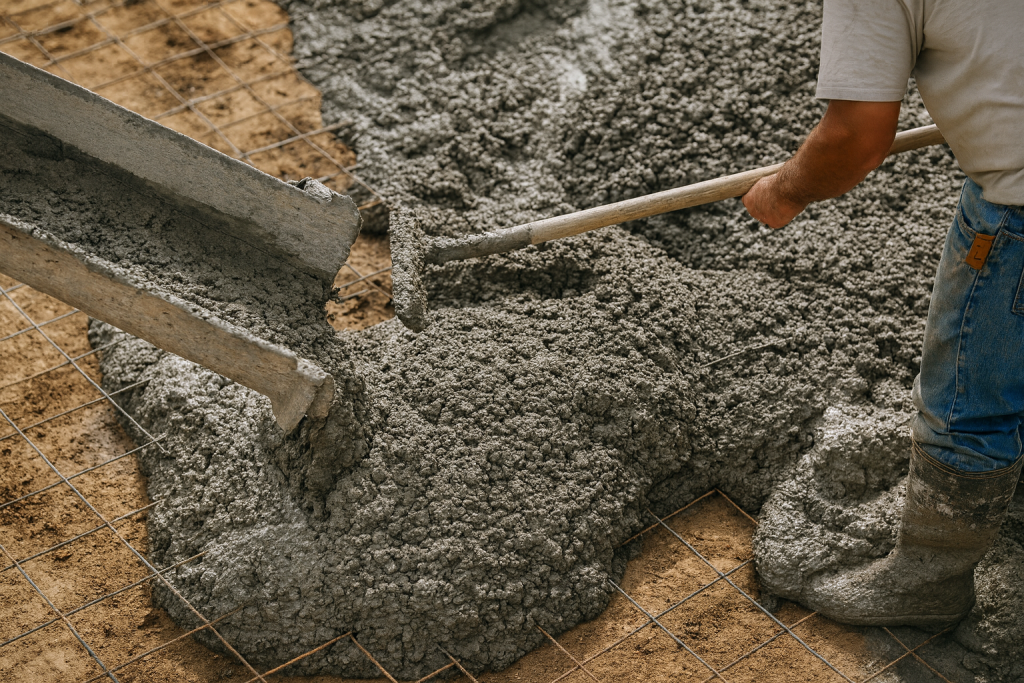
Concrete is everywhere. It’s under your feet when you walk down the street, it’s holding up the bridge you drive over, and it’s the core of the buildings where you live, shop, and work. We often take it for granted because it blends into the background of daily life. Yet without concrete, our cities, roads, and modern infrastructure wouldn’t exist.
For thousands of years, concrete has been used to create structures that last. The Romans built aqueducts, harbors, and arenas with early forms of concrete many of which still stand today. Modern concrete is far more advanced. It’s engineered to handle heavy loads, resist weather damage, and even heal its own cracks. If you understand the types of concrete, its composition, its properties, and where it’s best used, you can make better decisions for your projects and avoid costly mistakes.
This guide will break down concrete in a way that’s easy to follow. Whether you’re a builder, property owner, or just curious about the material that shapes our world, you’ll find practical insights, cost tips, and maintenance advice to make your concrete last longer and perform better.
Concrete is not the same as cement; it’s a combination of cement, water, and aggregates (sand, gravel, or crushed stone).
Key finding: The water to cement ratio is the biggest factor in determining strength. Too much water weakens concrete, while too little makes it hard to work with. Quality aggregates also make a big difference in durability.
Not all concrete is created equal. Each type serves a specific purpose.
Concrete is valued for its balance of performance and cost. The most important properties include:
Industry insight: Many concrete failures are due to poor curing, not poor materials. Curing keeps the concrete moist and allows it to develop its full strength.
The environment plays a huge role in how long concrete lasts.
Concrete’s versatility means it’s found in nearly every type of construction.
Concrete prices vary by type and region, but average costs per cubic yard (USD) are:
Labor, delivery, and finishing can add 30–50% more to the total.
The industry is moving toward more sustainable, high-performance materials:
Concrete may look ordinary, but its role in shaping our world is extraordinary. By understanding the different types, composition, properties, and uses, you can make smarter choices that improve performance, save costs, and extend lifespan. The right concrete, installed and maintained properly, can last for generations and that’s why it’s still the most trusted building material on the planet.
No. Cement is just one ingredient in concrete. It’s the binder that holds the mix together, while concrete also contains water and aggregates like sand, gravel, or crushed stone.
Concrete begins to harden within hours, but full curing takes about 28 days. During this time, keeping it moist is essential for maximum strength.
Normal strength concrete is common for driveways, but reinforced concrete is a better choice if you expect heavy vehicle loads or want extra durability.
Yes, but it should be a low-permeability mix that resists chloride penetration from saltwater. Air entrainment and proper sealing also help prevent damage.
Seal it every few years, clean it regularly, repair small cracks immediately, and avoid overloading the surface. Proper curing during installation also extends its life